Before deciding on MaroBrain, here is what most cautious buyers usually want to verify first.
If you are already looking into MaroBrain, you are probably not searching for hype. You are trying to answer a more useful set of questions: what the formula is really designed to support, whether the ingredient profile makes sense, how stimulant-sensitive buyers should think about it, and whether it looks like a serious nootropic option or just another page making oversized promises.
- Built around daily support for focus, memory, clarity, and steadier mental energy.
- Uses a one-capsule routine, which keeps the product simple to evaluate and easy to use consistently.
- Combines B vitamins with botanical nootropics and stimulant-like compounds rather than leaning on one single angle.
- Best next step is reviewing the official product page once the formula and safety considerations feel clear.
Clear product category
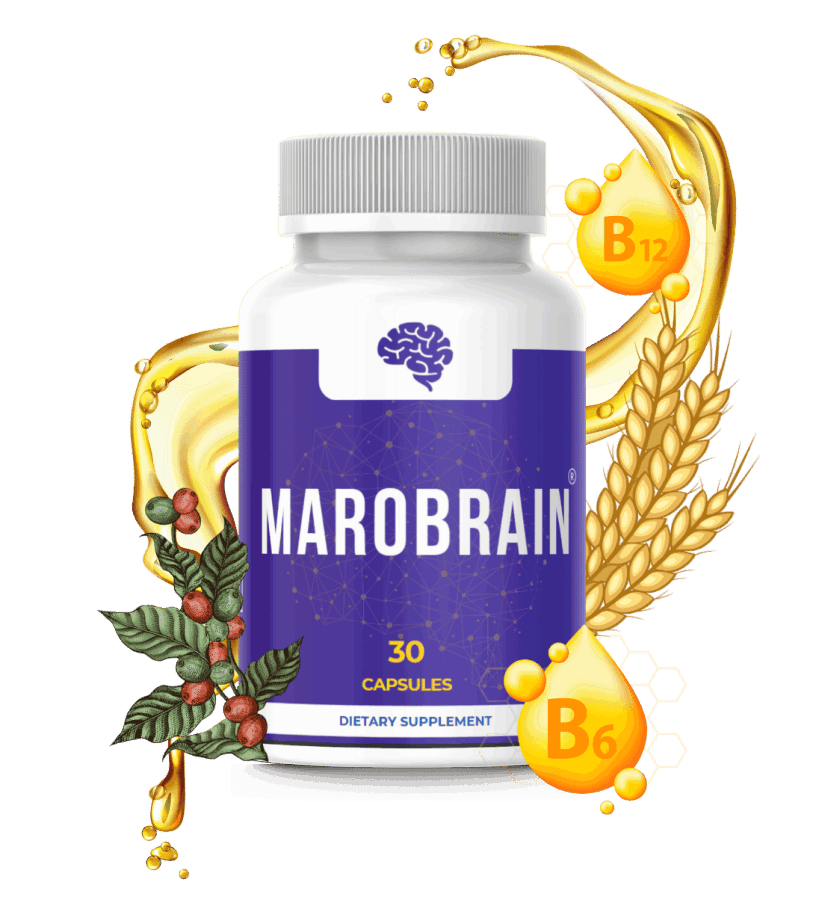
MaroBrain presents itself as a nootropic-style dietary supplement for adults looking into support for focus, mental clarity, and memory-related performance.
Recognizable label logic
The formula combines B vitamins with Bacopa, Rhodiola, L-Tyrosine, Huperzia, green coffee, theacrine, and theobromine rather than hiding behind a vague story alone.
Important buyer caution
The formula uses a proprietary blend and includes stimulant-like ingredients, which matters if you are comparing it against non-stimulant brain formulas.
Natural next step
Once the product makes sense on paper, reviewing the official page is the simplest way to verify the current label and support details directly.
A quick read on what MaroBrain looks like before you go any further.
For someone trying to separate a serious formula from recycled hype, these are the first points that matter most.
More structured than vague.
MaroBrain does not read like a blank-label product with no direction. It has a defined formula, a stated use, and a recognizable cognitive-support positioning.
Not ideal for stimulant-sensitive buyers.
Because the label includes green coffee, theacrine, and theobromine, this is not the same as evaluating a purely botanical or stimulant-free nootropic.
Adults comparing focus + memory formulas.
It makes the most sense for buyers who want a broader everyday brain-support approach rather than a product built only around energy or a single trendy ingredient.
Multiple MaroBrain-style domains exist.
That makes it more important than usual to verify the product page, contact information, and policy details carefully before ordering from any site.
What MaroBrain appears to be trying to help with.
Most people who start looking into MaroBrain are not trying to find a dramatic “brain breakthrough.” They are usually trying to deal with something more ordinary and frustrating: mental drag during the day, slower recall, trouble staying on task, foggy thinking during work, and the sense that their attention no longer feels as dependable as it used to.
That is why MaroBrain tends to sit in the category of a daily cognitive-support formula rather than a pure stimulant product. The way it is positioned suggests a broader goal: support for focus, memory-related performance, alertness, and clearer day-to-day thinking in one capsule.
For buyers comparing nootropic products, that broader positioning matters. It means the real question is not whether the page sounds exciting, but whether the label and the formula logic make enough sense to justify a closer look.
- Most relevant for adults comparing brain-support formulas rather than looking for a quick energy spike.
- More appealing if you want both attention support and memory-related ingredients in one routine.
- Worth evaluating more carefully if stimulant sensitivity is already part of your decision process.
Does MaroBrain make sense on paper?
From a formula standpoint, MaroBrain makes more sense than products that rely on a single ingredient or a plain caffeine angle. The logic here is layered: B vitamins for baseline nervous-system support, L-Tyrosine for demanding conditions, Bacopa and Huperzia for the memory side of the conversation, Rhodiola for stress-related fatigue, and stimulant-like support from green coffee, theacrine, and theobromine.
That does not mean it will feel the same to everyone. Supplements like this are not guaranteed performers, and nootropic responses vary with sleep quality, stress load, caffeine sensitivity, general health, and consistency of use.
The more realistic way to think about MaroBrain is this: it appears to be built to support sharper daytime thinking and steadier cognitive output, but it still needs to be judged like any supplement should be judged — by the logic of the label, your tolerance for the ingredients, and your fit with the formula.
Why MaroBrain stays on the shortlist for some buyers.
When someone keeps reading after the first impression, it is usually because the formula seems to support more than one useful part of the day.
Steadier focus during mentally demanding hours.
The formula is usually researched by people who want attention to feel more reliable while working, studying, reading, organizing, or moving through long days that require sustained mental output.
Support that includes memory-related ingredients.
One of the more appealing parts of MaroBrain is that it does not revolve around alertness alone. Ingredients like Bacopa and Huperzia give the formula a more memory-oriented feel than simpler stimulant products.
Clearer daytime thinking rather than just a buzz.
Buyers often look at products like this because they are trying to improve the quality of mental performance during the day, not just chase a stronger kick of energy that fades later.
A more complete daily nootropic approach.
Compared with simple formulas that lean on one compound, MaroBrain feels more comprehensive because the product combines vitamins, botanical nootropics, amino-acid support, and stimulant-like compounds in one routine.
Why people search “is MaroBrain legit?” before ordering.
That question is normal in this category. Brain supplements attract a lot of recycled pages, inflated claims, and look-alike domains, so the buyer who double-checks is usually the smart one.
What helps it look more legitimate
MaroBrain presents a defined ingredient list, a clear one-capsule use pattern, and a straightforward cognitive-support positioning instead of leaning entirely on a dramatic mechanism story.
What deserves caution
The product uses a proprietary blend, which means the individual amounts of several key ingredients are not disclosed. That makes dose-by-dose comparison harder than with fully transparent labels.
What buyers should still verify
Because multiple pages present themselves as MaroBrain destinations, it is worth checking that the product page, customer support details, and refund-policy information line up before placing an order.
What the label is trying to do — ingredient by ingredient.
This is the part that matters most if you prefer judging a product by what is actually on the label, not by how hard the marketing tries to impress you.
B1, B6 and B12
The B-vitamin side of MaroBrain gives the formula a more foundational feel. These vitamins are commonly associated with energy metabolism and nervous-system function, which is one reason they make sense in a daily cognitive-support product.
Green coffee, theacrine and theobromine
This part of the label is there for alertness and mental energy. It is also the main reason stimulant-sensitive buyers need to evaluate the formula more carefully. If you already know caffeine can disrupt your sleep or make you feel overstimulated, this is the part that matters most.
L-Tyrosine
L-Tyrosine is often discussed in relation to concentration and performance under demanding conditions. In practical terms, it helps the formula feel more aligned with mental workload, resilience, and sharper output when the day gets heavy.
Bacopa monnieri
Bacopa is one of the ingredients that gives MaroBrain more credibility in the memory-support conversation. It is one of the more recognizable names people look for when they want something broader than quick energy.
Rhodiola rosea
Rhodiola is often associated with stress and fatigue support. That matters because mental performance problems are not always about needing more stimulation. Sometimes the issue is cognitive wear and tear from pressure, routine overload, and prolonged fatigue.
Huperzia serrata
Huperzia stands out because it is often linked to memory and learning conversations through acetylcholine-related support. In simple terms, it helps MaroBrain feel more purpose-built for cognition rather than just general daytime stimulation.
The kind of reactions that matter when someone is still deciding.
These are not dramatic transformation stories. They are the kinds of quiet impressions people tend to care about when they are trying to decide whether a formula is worth taking seriously.
Jennifer M.
Tampa, Florida
I looked into MaroBrain because I wanted something that seemed more thought through than the usual brain supplement pages. What kept my attention was that the formula at least gave me a real label to evaluate instead of just a dramatic promise.
Robert L.
Plano, Texas
I was mainly comparing it against other nootropic products, and the combination of Bacopa, Rhodiola, L-Tyrosine, and the B vitamins made it feel more complete than a lot of the formulas I had seen.
Carolyn S.
Phoenix, Arizona
My hesitation was not really about whether I liked the idea of the product. It was whether it looked legitimate enough to keep researching. Seeing the formula explained in a more grounded way made it easier to keep considering it.
David H.
Columbus, Ohio
What stood out to me was that it did not look like a one-note “energy” capsule. It seemed more like a product for people who want focus support but still care about the memory and stress side of the equation.
What people usually mean when they search for MaroBrain complaints.
In products like this, “complaints” are not always a sign of a broken formula. Sometimes they are really signs of buyer hesitation, expectation mismatch, or poor source verification.
Expectation mismatch
Some buyers expect any brain supplement to feel dramatic right away. That can lead to disappointment when the product is actually a mix of stimulant support and ingredients that are usually judged over more consistent use.
Stimulant sensitivity
Because MaroBrain includes caffeine from green coffee plus theacrine and theobromine, some of the concern around side effects is better understood as sensitivity rather than proof of a fundamentally bad product.
Where people buy it
One practical concern is that multiple domains and third-party pages appear around MaroBrain. For cautious buyers, that makes verifying the official page and policy details part of the decision itself.
How MaroBrain reads next to other nootropic-style formulas.
Most buyers are not deciding in a vacuum. They are comparing one label against several others, even if they are not naming them out loud.
More complete than caffeine-first products
Compared with formulas that mostly chase alertness, MaroBrain feels broader because the memory and stress-support angles are more visible on the label.
Less transparent than fully dosed formulas
Compared with products that disclose exact amounts for every active ingredient, MaroBrain gives up some transparency by using a proprietary blend.
Best for buyers wanting balance
It makes the most sense for someone who wants a mixed formula for daily cognitive support, not for someone specifically looking for a stimulant-free or clinically dosed stack.
What to know if side effects are one of your main concerns.
That is one of the most reasonable questions to ask before buying any brain-support supplement, especially one that includes stimulant-like ingredients.
What seems most important about MaroBrain safety.
Based on the available product-information pages and buyer-guide material, MaroBrain does not stand out for a strong public pattern of widespread complaints about severe side effects. The bigger concern is not dramatic danger language — it is whether the formula suits your tolerance level.
The label includes caffeine from green coffee bean, plus theacrine and theobromine. That means stimulant-sensitive buyers should treat MaroBrain more carefully than a non-stimulant brain supplement. Taking it too late in the day, combining it with other stimulant products, or using it despite poor caffeine tolerance could make the experience less comfortable.
If you already use medications, have a heart condition, deal with anxiety sensitivity, have been told to limit caffeine, or are pregnant or nursing, it makes sense to step back and treat that as a real caution point rather than a small footnote.
What buyers often want clarified with formulas like this.
- Possible jitters or overstimulation when stimulant tolerance is low.
- Trouble sleeping if a nootropic with caffeine-related ingredients is used too late in the day.
- A sharper lift than expected when combined with coffee, tea, energy drinks, or pre-workouts.
- Mild digestive discomfort when starting a new supplement routine.
- Confusion about whether the product is meant for general support or for treating a medical issue.
The questions most people want answered before moving on.
These are the practical questions that usually matter more than marketing adjectives.
What is MaroBrain designed to support?
Does MaroBrain really make sense based on the formula?
Is MaroBrain legit or just overhyped?
Are there any side effects to think about?
How should MaroBrain usually be taken?
How long do people usually give a product like this before judging it?
Who may want to be more careful before using it?
Why do many buyers prefer checking the official page?
If you are still on the fence, here is the most balanced way to look at it.
If you made it this far, you are probably doing what cautious buyers usually do: trying to decide whether MaroBrain genuinely looks worth considering or whether it is better to move on and keep comparing.
That is a fair place to be. Brain-support supplements are one of those categories where the difference between a thoughtful formula and an overhyped page is not always obvious at first glance. What matters is whether the product feels coherent, whether the ingredients point in a sensible direction, and whether the safety considerations match your own tolerance and routine.
MaroBrain is easier to take seriously than pages that offer nothing but dramatic claims. It has a recognizable formula, a simple use pattern, and a more balanced cognitive-support angle than plain stimulant products. The main caution is also clear: if stimulant sensitivity matters in your case, that should be part of the decision, not an afterthought.
If the formula still seems relevant after looking at the ingredients, the side-effect considerations, and the legitimacy questions, the next reasonable move is simply to review the official page and verify the current details for yourself.
Ready to verify the current details?
You can review the official product page now and check the latest information without rushing anything.
Learn more on the official page